
SEO competitor analysis: who you really compete with
Any paid plan 5 minute read
Who it is for: Anyone who needs an argument for doing the work at all.
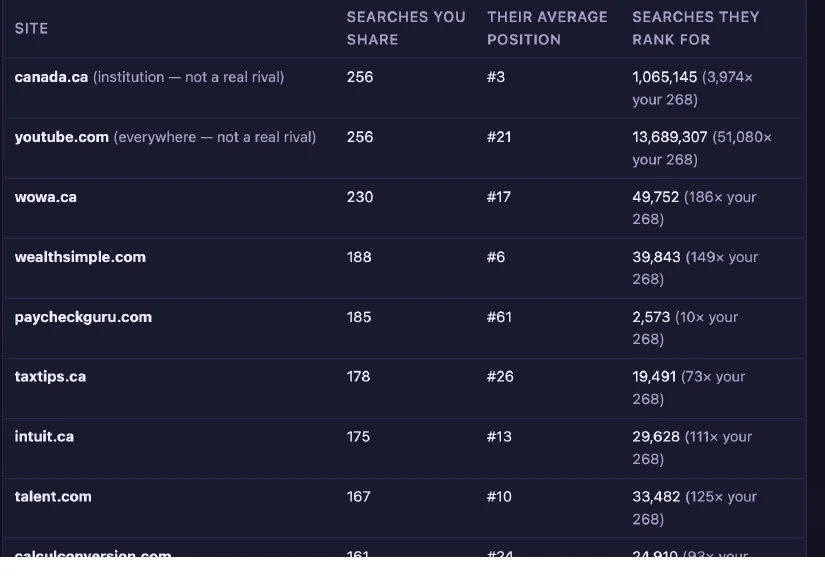
Pull the competitors for a site and you get the pages that actually appear in the same searches, which is often not who the client names. Run a competitor gap for the searches they win and you do not, or a page gap to compare one of your pages with one of theirs.
Why it matters
"We should do more SEO" loses to every other line in a budget meeting. A named rival and a number does not.
What to do
- Competitor discovery — who you actually compete with. The sites appearing in the same searches as yours, measured rather than assumed. Expect surprises: directories and institutions often rank where you do without being rivals, and the table marks them.
- Content gap analysis — what they win that you do not. The searches a competitor ranks for and you are absent from. This is the list a content plan should be built from rather than guessed at.
- Page gap — a head-to-head on one page. What their page covers that yours does not. Your page has to be yours, and we check that before spending anything: an unchecked page gap would let anybody research any two sites on your budget.
What you get back
A named rival, a number, and a list of the specific searches they take and you do not.
How to make money from it
This is usually the slide that wins the budget, and it works twice: on a prospect who has not hired you yet, and on an existing client's finance director at renewal. It also settles what to write next.
Worth knowing. A gap is not automatically an opportunity. Some of those searches belong to them and not to you, and a few belong to a government site you will never outrank. Read the list before turning it into a plan.
This one needs a paid plan. What each plan includes.