
What an SEO audit report looks like
This is a real report, not a mock-up: our own site, crawled on 23 October 2026, with the faults it found on us left in. Below is each part of it and what you are meant to do with it.
1. The score, and what it is not
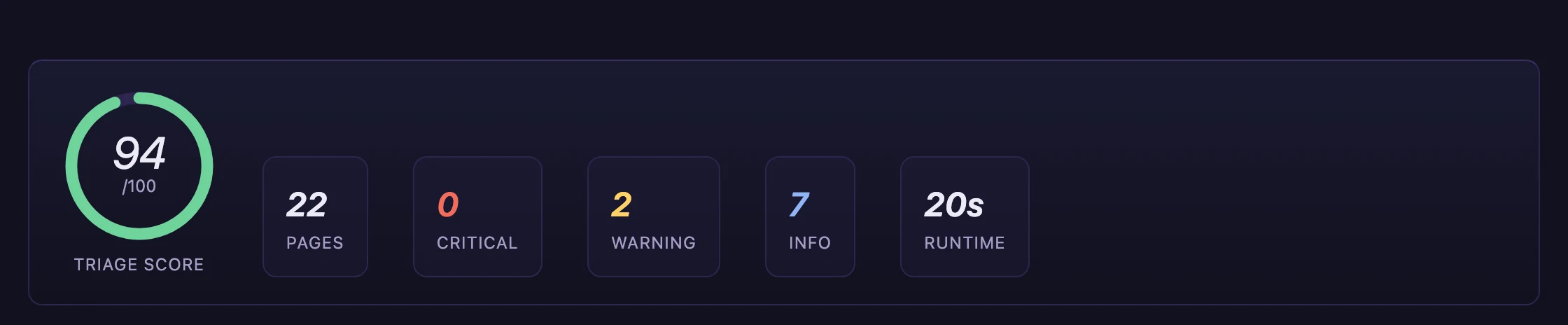
22 pages crawled in 20 seconds. Nothing critical, two warnings, seven worth knowing about. The score orders your own work queue — it is not a grade from Google, nobody outside this tool has ever heard of it, and the report says so in the line underneath it. Any tool that shows you a score and implies Google computed it is telling you something untrue.
2. What was checked, including what came back clean
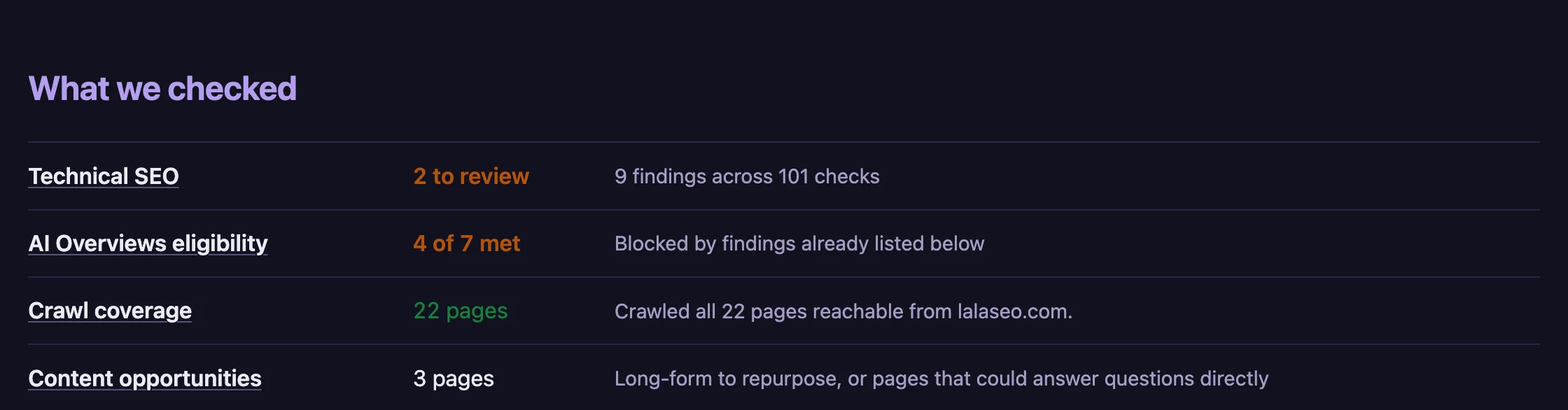
Most tools show you only what is broken, which leaves you unable to tell a clean site from an unfinished scan. This says how many of the 101 checks ran, what came back, and how much of the site was reached. On this run it also says our own AI Overviews eligibility was 4 of 7 — because of the two warnings below. We have left that in.
3. A finding, with the evidence under it
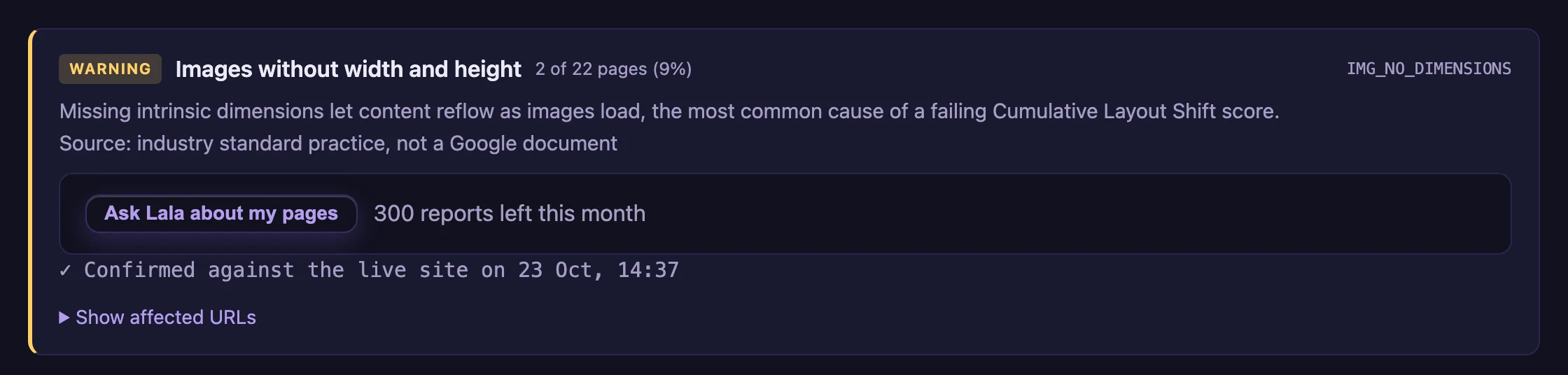
Every finding carries four things: how many pages it affects and what share of the site that is, why it matters, where it comes from — Google's own documentation or long-standing practice, named either way — and the addresses it was found on, behind "Show affected URLs".
The line that matters most is the last one: Confirmed against the live site, with the time. After the crawl, findings are re-fetched from the live page and checked again before you ever see them. A finding you cannot reproduce is a finding that wastes your afternoon, and anything we could not confirm says so instead of being presented as fact.
4. AI Overviews eligibility, against Google's own list
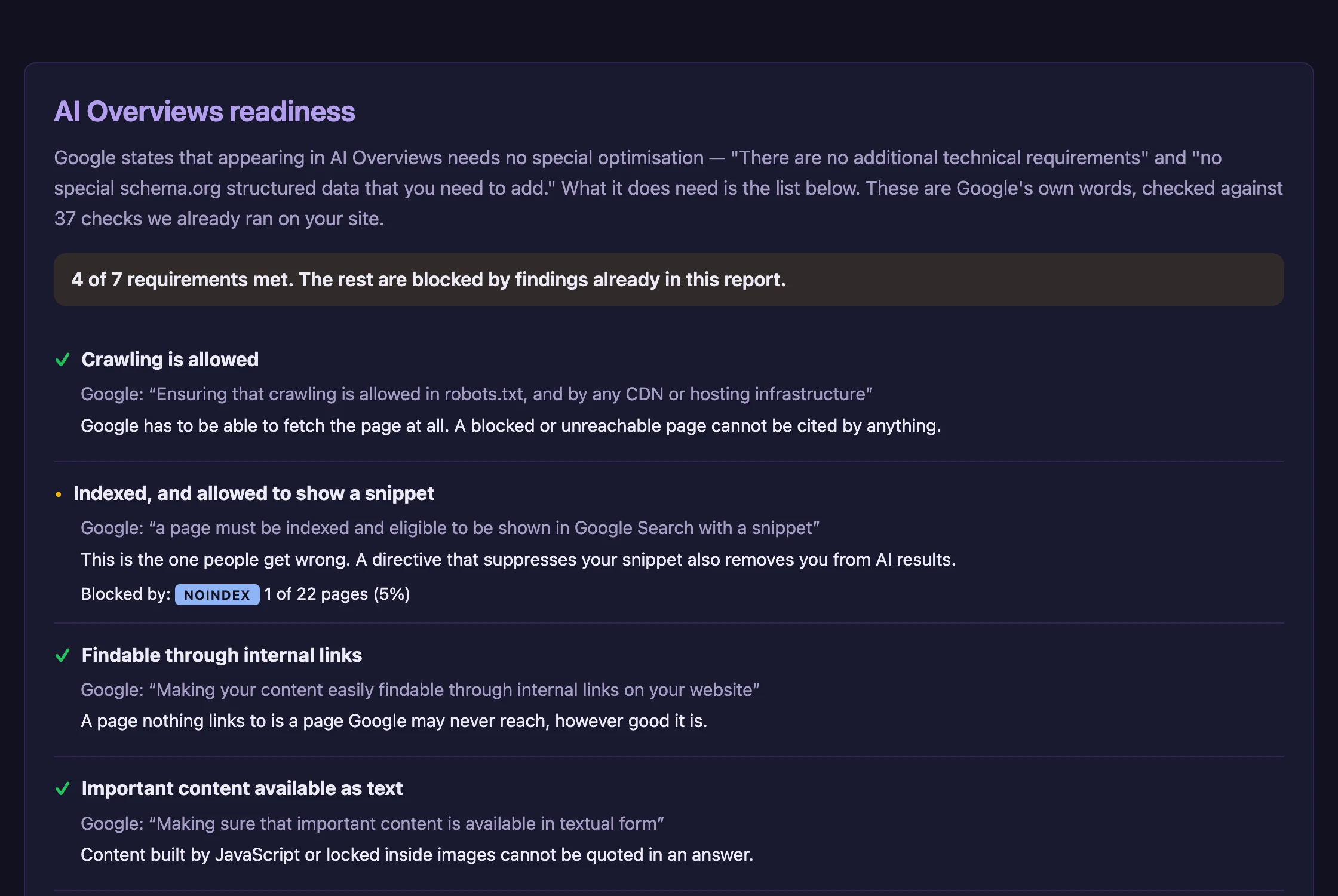
Google states plainly that appearing in AI Overviews needs no special optimisation: "There are no additional technical requirements" and "no special schema.org structured data that you need to add." What it does need is the list Google publishes, and this section walks it, marking each condition against checks that already ran on your pages. The page it quotes is re-read word for word by our own doc watcher, so this section cannot quietly go out of date — what Google changed, and what we changed.
What is not in a free report
Everything above is free, on every plan, for every page crawled — up to 300 pages, with no account for your first audit. A free account keeps your reports so you can see what changed, and adds the plain-English explanation written for each finding.
What the paid plans add is data we have to buy from outside: what you rank for, who you compete with, who links to you, and whether AI assistants mention your brand. The pricing page says which plan includes what.
Get this for your own site
About a minute for a small site. No account, no card.
Read the next one
How to read an SEO audit report goes through the same report in more detail, including what to fix first.